
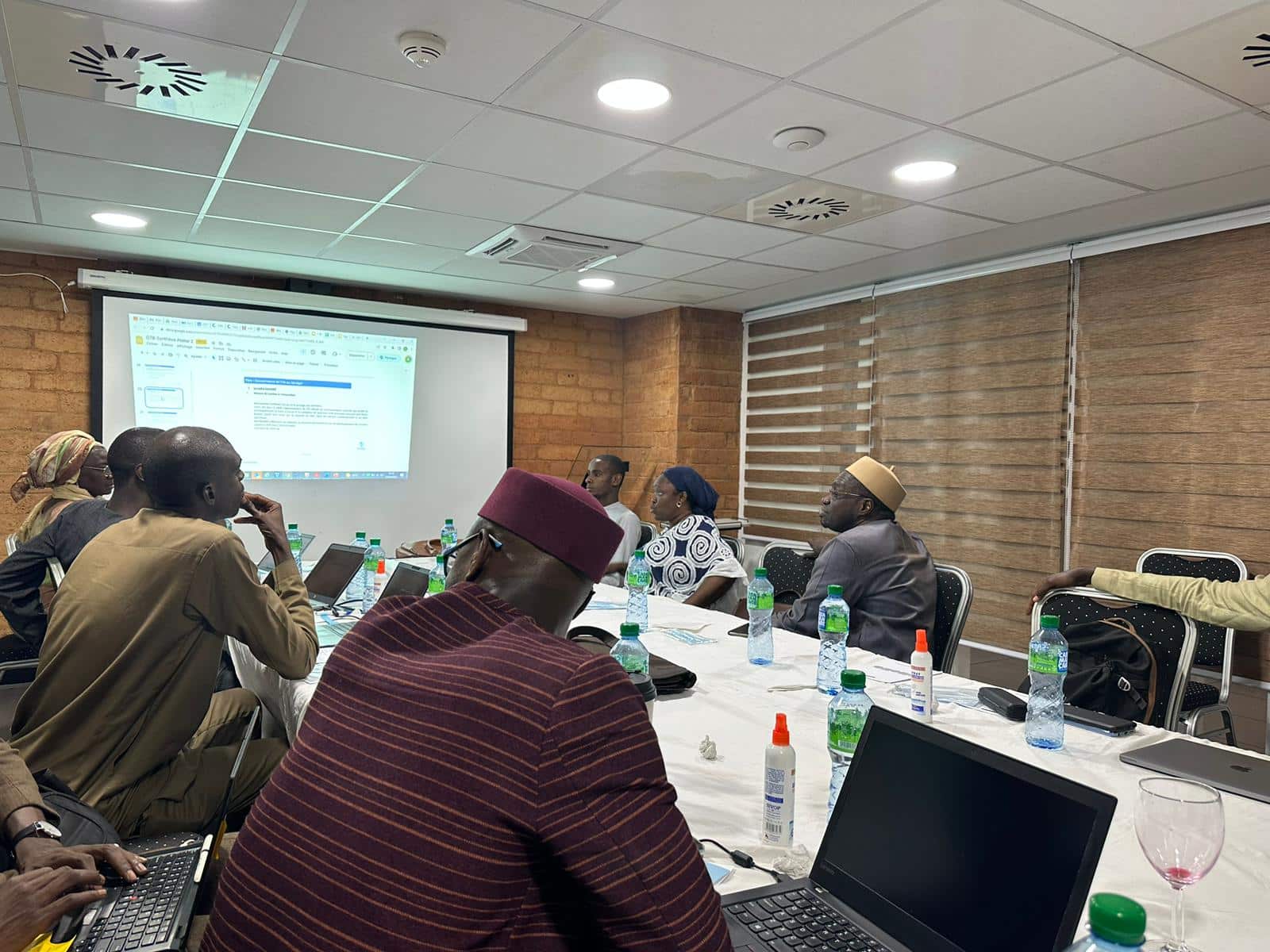
From 26 to 28 July, Ipar took part in the National Consultations workshop for young experts, key stakeholders, activists, researchers and professionals in the field of AI systems in Senegal, on the theme «Mapping the research and expertise research and expertise of young users of Artificial Intelligence systems and mobilising their expertise for the ethical regulation of AI use», organised by UNESCO and Polaris Asso in Saly.
As part of UNESCO’s implementation of the McGovern project in Senegal, research and analysis activities are being carried out with a view to contributing to the production of a national report on AI systems in Senegal.
This report will draw on the findings of the AI readiness assessment, based on UNESCO’s assessment methodology (RAM), and will reflect the outcomes of the national multi-stakeholder consultations to be organised as part of this report.
The aim of the report will be to inform the country’s overarching national strategy on AI and to provide an evidence-based framework for the ethical governance of AI, identifying both short- and long-term priorities, and using the Recommendation on the Ethics of AI as a blueprint.
The aim of this consultation with young people was to facilitate the production of this national assessment report on AI systems in Senegal.
More specifically, the consultation made it possible to:
- To facilitate the work of a multidisciplinary national steering committee which will oversee the implementation of the project on the government’s side;
- To facilitate the deployment of RAM, with a view to gaining an in-depth understanding of the potential for AI development, the state of the art in the country in terms of institutional and regulatory preparedness, and the regulatory and institutional gaps that need to be addressed in order to turn that potential into action; To prepare a diagnostic report based on the results of the RAM exercise;
- To facilitate discussions aimed at identifying young people’s needs, concerns and policy priorities.
The results of the consultation have led to recommendations put forward by young people and tailored to local contexts, which will help to foster social acceptance and ensure that all stakeholders take ownership of the ethical issues surrounding AI in Senegal and the wider region.
Furthermore, the data to be collected will also provide the information base needed to develop an AI strategy grounded in ethics and respect for human rights.
This process of consulting young people on the current situation will underpin all aspects of future initiatives, and to this end, it must be based on empirical and concrete realities.
It should be noted that, following IPAR’s participation in various workshops on the MCTEN’s AI strategy, this consultation workshop enabled IPAR to present its various projects relating to AI, responsible data use and production – notably GRAIN, DUA, CLIMB and AGRIDATA, and to contribute to the development of recommendations on gender, ethical and legal issues surrounding AI.
IPAR is continuing to implement the DUA project in the pilot countries. Following Senegal, Burkina (CEDRES) and Read more
IPAR took part in the second workshop on the formulation of the national Artificial Intelligence strategy, which was held on 21 Read more
 FR
FR  EN
EN