
Key findings from the study on AI policies in West Africa
By Dr Marame Cissé, Dioulli Kane and Ndeye Magatte KEBE
Artificial intelligence (AI) is gradually transforming economies, public administrations and public services around the world. In West Africa, governments are stepping up initiatives to capitalise on this technological revolution. But one key question remains: are national policies sufficiently well-structured to ensure that artificial intelligence is ethical, inclusive and tailored to African realities?
This question is addressed by a comparative analysis of the political, legal and institutional frameworks in Senegal, Benin, Côte d’Ivoire and Burkina Faso with regard to AI[1] »Inclusive and Responsible:', produced by Fatou FOFANA and Mouhamed Ndiaye BOCOUM and presented during a webinar organised by the Gender and Responsible AI Network (GRAIN).
Why was this study carried out?
Whilst artificial intelligence offers significant opportunities in sectors such as agriculture, education, healthcare and public services, it also carries well-documented risks. Algorithmic bias, discrimination, breaches of privacy and the exclusion of vulnerable groups exacerbate inequalities when they are not anticipated and addressed through appropriate public policies and governance.
This comparative analysis of AI policies in West Africa forms part of the second phase of the GRAIN project, which aims to promote responsible, inclusive and gender-sensitive artificial intelligence in sub-Saharan Africa. The study has three objectives: to analyse existing policy, legal and institutional frameworks; to identify key gaps; and to propose recommendations to strengthen AI governance in the region.
Four countries, four levels of maturity
The study focuses on four French-speaking countries: Senegal, Benin, Côte d’Ivoire and Burkina Faso. Their selection allows for a comparison of different levels of progress in the development of public policies relating to artificial intelligence.
Benin was the first country in the sub-region to adopt a national artificial intelligence strategy in 2023. Senegal followed suit with its 2024–2028 strategy, whilst Côte d’Ivoire has adopted an AI strategy for 2030 that explicitly places inclusion, ethics and accountability at the heart of its digital ambitions.
The case of Burkina Faso is unique. The country does not yet have a national strategy specifically for artificial intelligence, but it does have a relatively advanced legal framework. Its law on the protection of personal data is the only one, amongst the four countries studied, to explicitly refer to processing based on artificial intelligence. This situation shows that the absence of a national strategy does not necessarily mean there is no foundation for future AI governance.
Real progress… but several challenges remain
At the continental level, the African Union has made significant progress in equipping the continent with a coherent set of strategies relating to digital transformation, agriculture, education, data and artificial intelligence, gradually integrating the principles of gender, equity, diversity and inclusion (GEDI). These strategic frameworks reflect a shared vision of ethical, responsible and inclusive AI, serving Africa’s structural transformation, whilst emphasising the reduction of digital divides and the protection of fundamental rights. They thus form the foundation for continental governance of AI and provide member states with key guidelines for aligning their national strategies.
At sub-regional level, one of the key findings of the analysis is that the four countries now recognise artificial intelligence as a strategic driver of development. They have digital policies, cybersecurity frameworks and legislation on the protection of personal data, which provide a solid foundation.
Furthermore, the principles of Gender, Equity, Diversity and Inclusion (GEDI) are recognised in national AI strategies but are still not sufficiently taken into account at an operational level (indicators, budgeting, training policies, etc.). Côte d’Ivoire stands out for its operationalisation of GEDI principles, through measures aimed at strengthening digital inclusion, reducing regional disparities and promoting equitable access to infrastructure. Its strategy also provides for targeted actions in favour of women, young people and rural communities, whilst incorporating mechanisms to prevent algorithmic bias and to develop AI solutions tailored to the needs of priority sectors.
None of the countries studied currently has specific legislation governing artificial intelligence. Concepts such as algorithmic transparency, independent audits of AI systems and redress mechanisms for citizens are still very rarely taken into account in existing regulatory frameworks.
In addition to setting out the current situation, the analysis sets out a series of recommendations designed to support West African governments in moving towards more responsible artificial intelligence.
- A political, institutional and legal framework to be established and reformed
- Revise national strategies to fully incorporate GEDI principles (gender, equity, diversity and inclusion)
- Adopting specific legal frameworks for AI
- Establish national authorities or mechanisms for AI governance
- Promoting ethical data governance
- Cross-cutting capacity-building measures to be promoted
- Supporting African research into AI
- Strengthening the capacity of public institutions
- To promote closer regional cooperation between West African states
- Self-regulation and accountability mechanisms
- Developing systems for algorithmic transparency
- Introduce independent audits
- Ensuring that citizens have access to redress mechanisms
- Targeted sector-specific recommendations
- Agriculture : to develop AI solutions tailored to smallholder farmers
- Education : incorporating the principles of inclusion into education policies
- African languages : investing in technologies that take account of the continent’s linguistic diversity
Shaping the Future of AI in West Africa
This in-depth comparative analysis clearly highlights the proliferation of national strategies, the strengthening of continental frameworks and the growing mobilisation of an increasingly diverse ecosystem of stakeholders.
But these advances, however significant they may be, remain fragile as long as they remain isolated. A profound and lasting transformation will depend, above all, on countries’ ability to move beyond sectoral approaches and build a truly coordinated and inclusive system of governance based on human rights, transparency, diversity and strengthened regional cooperation.
Artificial intelligence is not merely a technological challenge. Above all, it represents a societal choice. The decisions taken today will determine how this technology will help, in the future, to reduce inequalities, support innovation and accelerate sustainable development in West Africa.
Fatou FOFANA and Mouhamed Ndiaye BOCOUM are legal experts

On Monday 15 May 2023, IPAR took part in an "expert panel on artificial intelligence as a driver of development” in Saly Read more
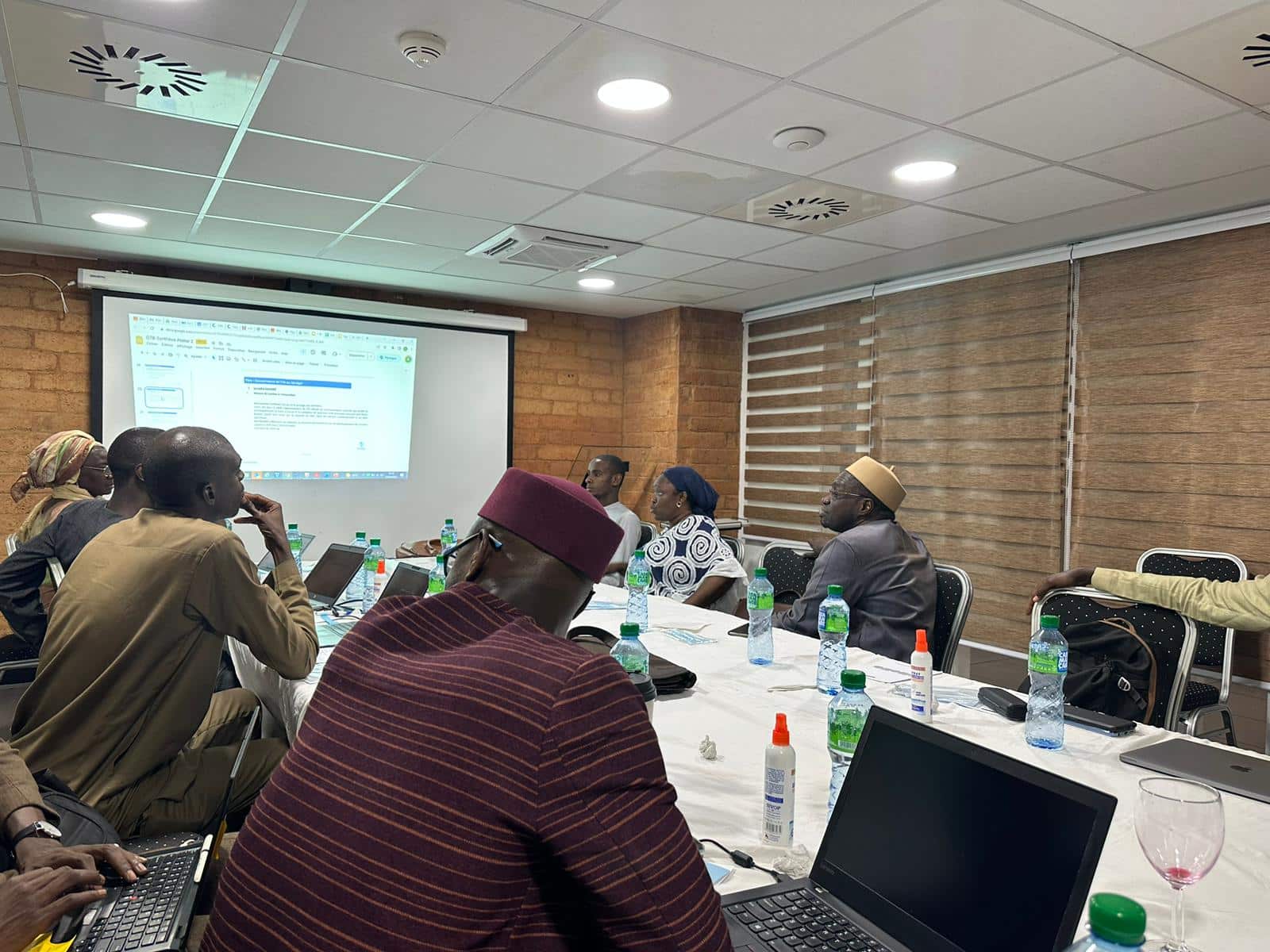
IPAR took part in the second workshop on the formulation of the national Artificial Intelligence strategy, which was held on 21 Read more
 FR
FR  EN
EN