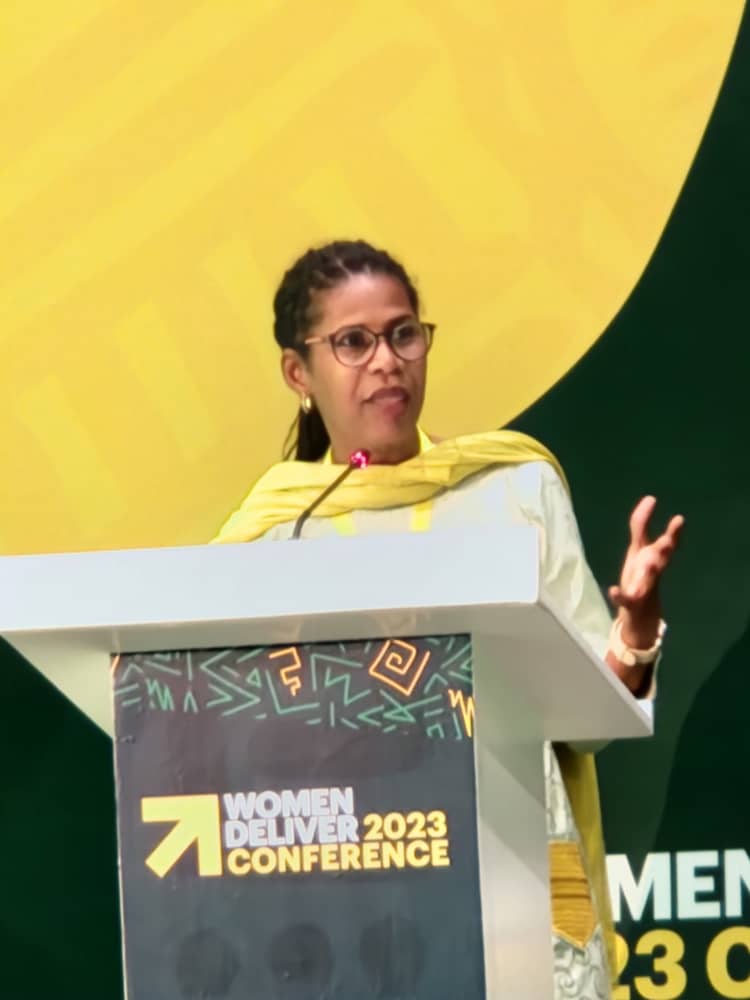
The Women Deliver Conference (WD2023) is one of the largest multi-sectoral gatherings aimed at advancing gender equality. Co-created by community advocates, civil society, multilateral organisations, the private sector, philanthropic organisations and young people, representing communities facing systemic discrimination around the world, WD2023 brought together, from 17 to 20 July in Kigali (Rwanda), some 6,000 advocates in person and over 200,000 advocates online from a variety of fields. It centred on the theme «Spaces, Solidarity and Solutions» and addressed, amongst other issues, Artificial Intelligence (AI) and gender inclusion.
By placing sexual and reproductive health and rights at the heart of its agenda, the conference drew on intersectional feminist principles to address the complex issues affecting girls and women – from climate change to gender-based violence and unpaid care work – in order to identify and encourage participants to collectively implement evidence-based solutions.
Represented by its Research Director, Dr Laure Tall, IPAR gave a presentation on Wednesday 19 July on the topic «Catalyse evidence-based, feminist and responsible artificial intelligence to improve women’s health», during a session organised by the International Development Research Centre (IDRC) on the sidelines of WD2023.
The aim of this session was to explore how research can be harnessed to catalyse the responsible development and roll-out of AI innovations in order to advance maternal, sexual and reproductive health and rights by strengthening health systems in low-income countries, developing countries and countries in transition. The term «responsible» refers to ‘AI innovations that are ethical, respect human rights, are inclusive, equitable and contribute to environmental sustainability’. In short, the aim of this session was to enable participants to gain a better understanding of the challenges and issues associated with AI in the field of women’s health, as well as the possible solutions and opportunities for addressing these challenges through research.
Indeed, according to the WHO, indicators of maternal, sexual and reproductive health in low-income countries are not keeping pace with other health indicators. Maternal mortality rates are far from meeting the target set out in SDG 3 (Good Health and Well-being). Furthermore, it is reported that the prevalence of child marriage and teenage pregnancy remains high, and there are significant gaps in access to contraception, safe abortion and post-abortion care, as well as to education on sexual and maternal health.
AI: a powerful tool for advancing gender equality
During her presentation, Dr Tall pointed out that «The time needed to achieve gender equality is now estimated at 136 years». She does, however, suggest ways of avoiding having to wait that long. In her view, «if we do not want to wait 136 years, we must harness the power of AI effectively and responsibly as a means of bridging the gap».
She also pointed out that «current data do not provide a complete picture of women’s health, particularly in the Global South». According to her, «we need disaggregated data, and disaggregating data is not as simple as counting men and women». Dr Tall went on to say that «data collection for AI also requires intersectional approaches».
«Artificial intelligence (AI) has shown great promise" to improve the provision of information and services relating to maternal, sexual and reproductive health and rights. »For example, chatbots and telemedicine have proved to be acceptable and practical in a variety of contexts,” she added.
The use of AI does, however, carries risks that need to be mitigated, warned the Research Director at IPAR, noting in passing that the potential risks and drawbacks of using AI, particularly with regard to privacy and confidentiality, are causing serious concern. According to her, it is essential to «protect vulnerable women and girls from unintended consequences such as stigmatisation, discrimination and intimate partner violence».
It should be noted that the session was chaired by Samuel Oti, Senior Programme Specialist at IDRC, in the presence of Kathryn Toure, Regional Director of IDRC’s Regional Office for East and Southern Africa.
Alongside Laure Tall, Research Director at the Initiative Prospective Agricole et Rurale (IPAR) in Senegal, the session also featured Dr Noor Sabah Rakhshani of PHC Global (Pakistan), Dr Rosalind Parkes-Ratanshi, Institute of Infectious Diseases (Uganda), Dr Cintia Cejas, Instituto de Efectividad Clínica y Sanitaria (Argentina) and Dr Nadine Sabra, Global Health Institute, American University of Beirut (Lebanon).

On Monday 15 May 2023, IPAR took part in an "expert panel on artificial intelligence as a driver of development” in Saly Read more
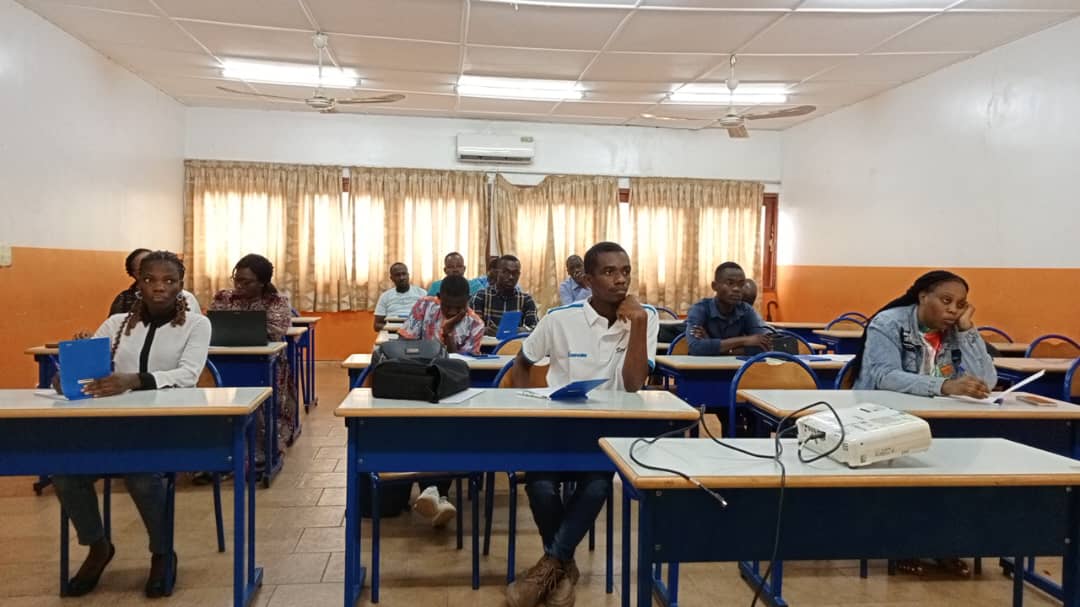
IPAR is continuing to implement the DUA project in the pilot countries. Following Senegal, Burkina (CEDRES) and Read more
 FR
FR  EN
EN