By Fauziya Ali
If the future of AI in Africa is to be one of empowerment, inclusion and peace, it must be designed with women in mind from the outset, not as an afterthought.
Recently, in a sun-drenched co-working space in Nairobi, I watched Claudine, aged 23, typing lines of Python code on her laptop, completely absorbed in her work, whilst mentors moved amongst the rows of students.
What struck me was not just the code, but the calm confidence that filled the room, the energy of women deeply committed to building something greater than themselves.
This is one of the many striking impressions I have taken away from my visits to technology hubs across the continent, where African women are not merely adapting to the digital age: they are actively shaping it.
Claudine is part of a new group of women taking part in initiatives aimed at training African women in artificial intelligence and cybersecurity.
For her, it’s not just a set of skills. It’s a lifeline.
Across Africa, I have met women who have found economic opportunities in outsourced digital work such as customer service, data labelling and transcription.
These flexible, remote roles have provided a vital source of income in communities where formal employment is often limited or non-existent.
A subtle change is taking place.
According to findings presented at the World AI Summit in Kigali and reported by the Associated Press, automation is set to disrupt precisely these roles.
The impact will not be felt equally across the board. Women, particularly those in the digital economy, face a disproportionate risk.
Claudine’s story raises a broader question that I often find myself pondering: as Africa embraces the Fourth Industrial Revolution, will AI widen the gap for women, or will it help to narrow it?
Signs of hope
Microsoft, for example, has pledged to train one million South Africans in AI and cybersecurity by 2026, according to Reuters.
And in laboratories and political circles across the continent, African researchers are engaged in important discussions on the ethical governance of AI—discussions that must continue to place women at the centre.
Beyond the continent, there are examples to look to.
The development of DeepSeek R1, an advanced AI model built for just $5.6 million, has become a case study in how powerful systems can be developed outside Silicon Valley.
A recent briefing by the Carnegie Endowment highlighted its potential for emerging markets, suggesting that locally relevant AI does not require a budget running into the billions of dollars.
Africa’s challenge is not a lack of ambition or talent—it is a lack of access.
But even that is starting to change.
The roll-out of the Starlink satellite internet service in rural areas is connecting thousands of people for the first time. This connectivity, combined with AI tools, is helping to diagnose illnesses and assess crop conditions on Kenyan farms, and to provide personalised learning in Ethiopian classrooms.
Does the future that is taking shape affect everyone?
However, technology alone is not enough. Inclusion requires a conscious effort.
Researchers and campaigners have long warned about algorithmic bias and the way in which systems can unintentionally perpetuate the forms of exclusion that we have spent decades trying to rectify.
For African women, whose experiences are often absent from training datasets, the risks are very real.
That is why I believe our investment must go beyond infrastructure.
We must invest in people.
Governments, businesses and civil society must work together to fund education, strengthen regulatory frameworks and embed gender equality at every stage of AI deployment.
Security issues
But it’s not just about jobs and the economy. It’s also about security.
When women lose their digital livelihoods due to automation, the consequences are not merely financial.
I have seen how economic instability can lead to vulnerability, creating opportunities that are exploited by conflict actors and extremist groups.
In fragile regions, women who are unable to support themselves are more likely to be recruited, radicalised or drawn into conflict. Equipping them with skills for the future is not just good policy. It is a form of peace-building.
As women become more involved in the digital economy, their safety must be a priority.
I have spoken to women who have experienced online harassment, surveillance and data breaches, often with no recourse.
Gender-sensitive digital safety frameworks are essential to ensure that online participation does not come at the expense of safety or dignity.
AI is also increasingly being integrated into national security systems such as border control, surveillance and predictive policing.
However, these systems are based on datasets that often do not reflect the realities of life in Africa, let alone those of women.
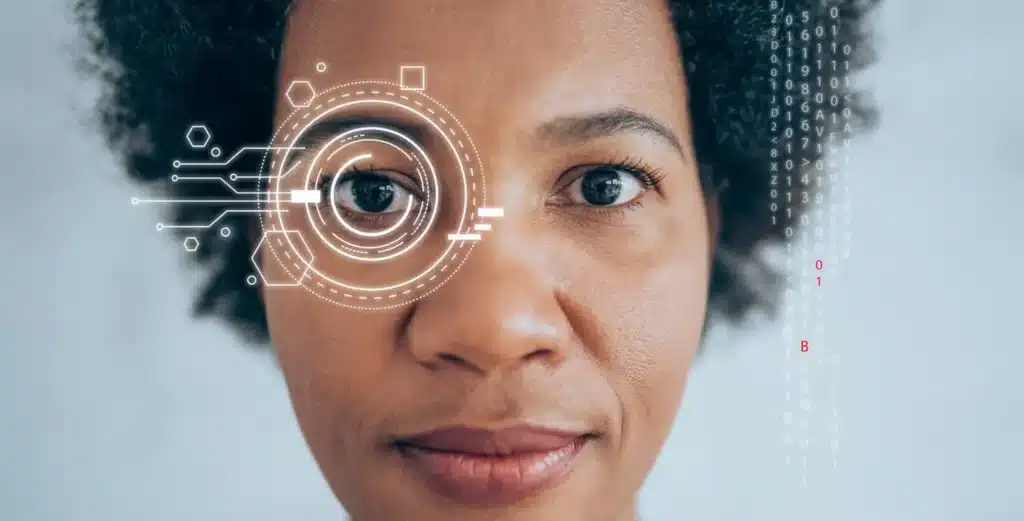
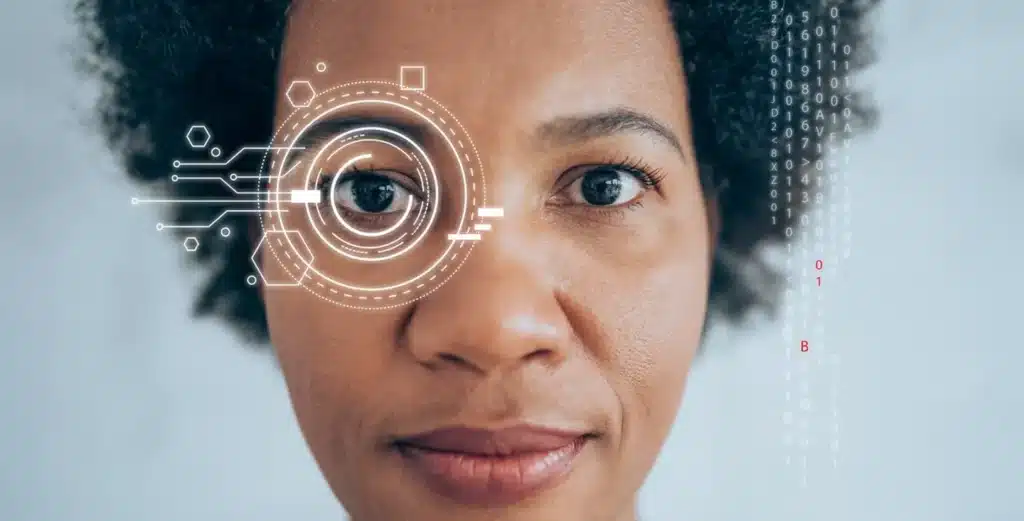
Facial recognition technologies, for example, misidentify women of colour at disproportionately high rates.
Inaccurate AI systems do more than just make mistakes. They have real-world consequences: excessive surveillance, exclusion and even human rights violations.
Gender-sensitive programmes and algorithms
That is why ethical safeguards are non-negotiable.
We need inclusive data, transparent algorithms and gender-sensitive testing protocols to be embedded in every national AI strategy. Without them, the systems that are supposed to protect us could, on the contrary, cause harm.
AI also has a role to play in peacebuilding itself.
Studies show that women play a crucial role in conflict prevention and peacekeeping.
By training women in AI and digital storytelling, we are giving them the tools to counter extremist narratives, participate in policy-making and contribute to social cohesion.
I have seen the power of women to shape narratives, using digital platforms to amplify community voices and challenge the root causes of divisions.
Back in Nairobi, Claudine smiles as her script compiles.
She may not see herself as part of a revolution, but she is. Just like millions of women across Africa who are learning, building and leading.
The future of AI on this continent is not a distant prospect. It is already here, coded line by line in co-working spaces, classrooms and conference halls. If the future of AI in Africa is to be synonymous with empowerment, inclusion and peace, it must be shaped alongside women – not as last-minute participants, but as full members of the pioneering generation shaping the future that lies ahead.
The author, Fauziya Ali, is chair of Women in International Security Horn of Africa (WIIS-HoA). She is an expert in human security, gender and AI. X account: @FauziyaAAli
Disclaimer: The views expressed by the author do not necessarily reflect those of TRT Afrika.
Source: https://trt.global/afrika-fran%C3%A7ais/article/c7b01dbf5ea3
Not so long ago, people lived and went about their daily lives in close-knit communities. Every shopkeeper knew their customers personally and could...
This Machine Learning Glossary aims to provide a brief introduction to the most important machine learning terms – both for commercial and...
 FR
FR  EN
EN