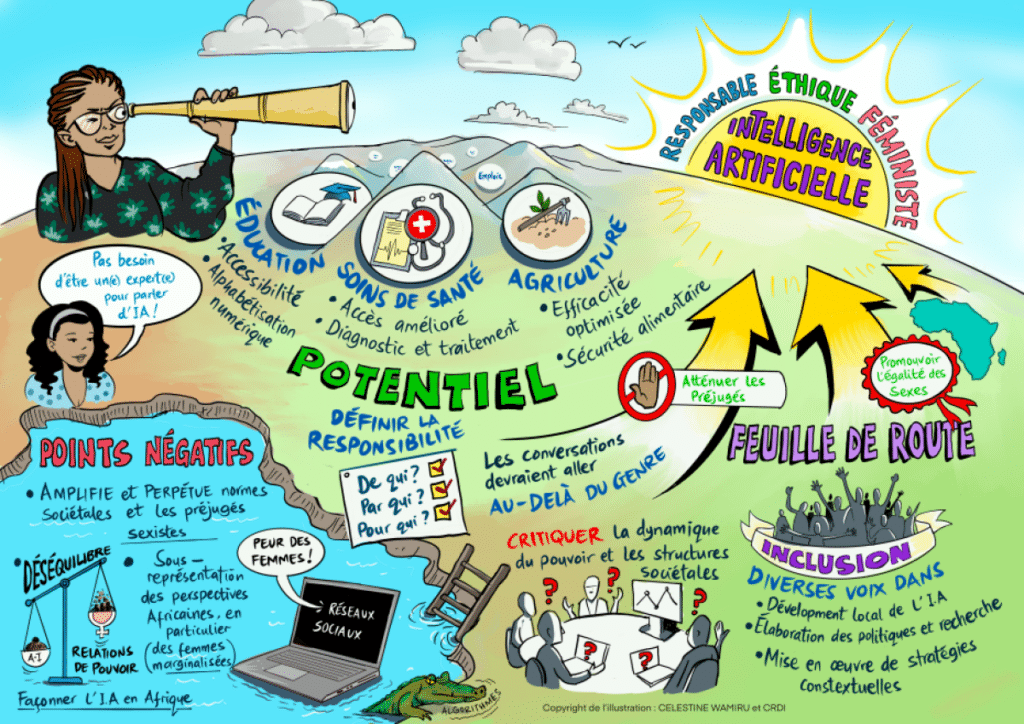
The illustration provides an overview of the discussions at the Gender Café and highlights the main areas covered: the potential of AI, its negative effects and some recommendations.
Members of the artificial intelligence (AI) community in East Africa argue that there is an urgent need for ethical considerations, feminist approaches, and inclusive African policies and strategies in the development and implementation of AI on the continent. These are just some of the recommendations to emerge from a Gender Café entitled «Responsible, Ethical and Feminist AI for Development», organised jointly by Global Affairs Canada and IDRC in Nairobi in March 2024. During the event, a group of experts, practitioners, decision-makers and researchers based in Nairobi—many of whom are supported by IDRC—examined how AI technologies drive progress and innovation, but also pose significant challenges and risks, particularly with regard to gender disparities and inclusion.
Highlights
- AI will initially take on roles in areas such as customer service and human resources, where the majority of staff are women.
- Those interviewed as part of the research into the roll-out of AI expressed their concerns about what this means for their jobs.
- Employers were optimistic about the use of AI in the workplace.
The impact of AI on women’s employment
The International Labour Organisation estimates that AI could displace 3.7 % of all female jobs worldwide, equivalent to 48 million jobs. This compares with a loss of 1.4 % for men. Research funded by IDRC and conducted by the Centre for Intellectual Property and Information Technology Law (CIPIT) at Strathmore University on the banking sector in Kenya revealed that AI would initially take over in areas such as customer service and human resources, which are predominantly staffed by women. The research project also examined people’s attitudes towards potential changes. «Respondents were very concerned about the roll-out of AI and what it meant for their jobs. But from the employers» perspective, the reaction was positive: ‘I’ll use AI and everything will be fine,’ noted one participant in the research.”.
Those taking part in the Café also discussed how the AI systems that feed on data reinforce gender-based biases. For example, when people reinforce negative stereotypes (« »all women love money’”) on social media, this digital information is incorporated into the AI’s learning process, which affects how AI systems understand gender, thereby perpetuating – or even normalising – stereotypes and biases.
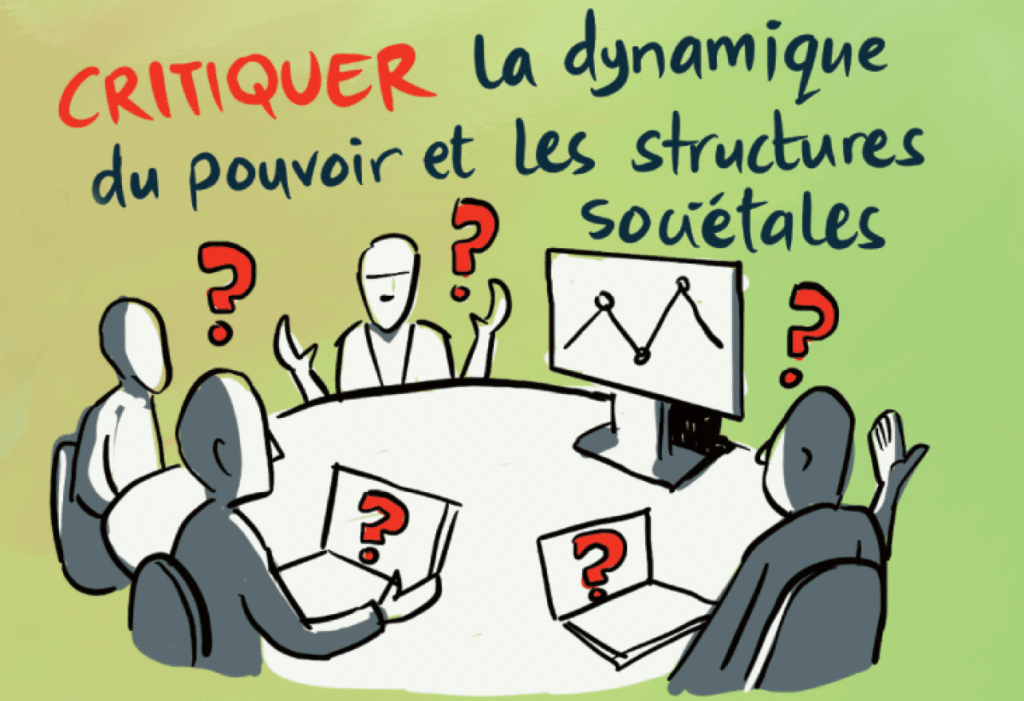
Inclusion in AI development: How do we address issues of power relations?
The lack of representation of women and marginalised groups in AI development and decision-making processes has been identified as a critical issue. The AI and technology sectors are predominantly led by middle-class men. This hierarchy leaves marginalised groups, particularly African women, with limited influence and access to AI development.
Another challenge raised was the predominance of «colonial models» of AI, which are not designed to understand or incorporate indigenous African perspectives or models. An expert in socio-technical systems and AI ethics emphasised that true inclusion goes beyond mere numerical representation. «Ideally, we should be asking ourselves the following questions: How do we address issues of power relations? Who has the money? Who has the expertise? Who designs what? Who shapes these perspectives, and whose political and corporate interests are we defending?» she asked.
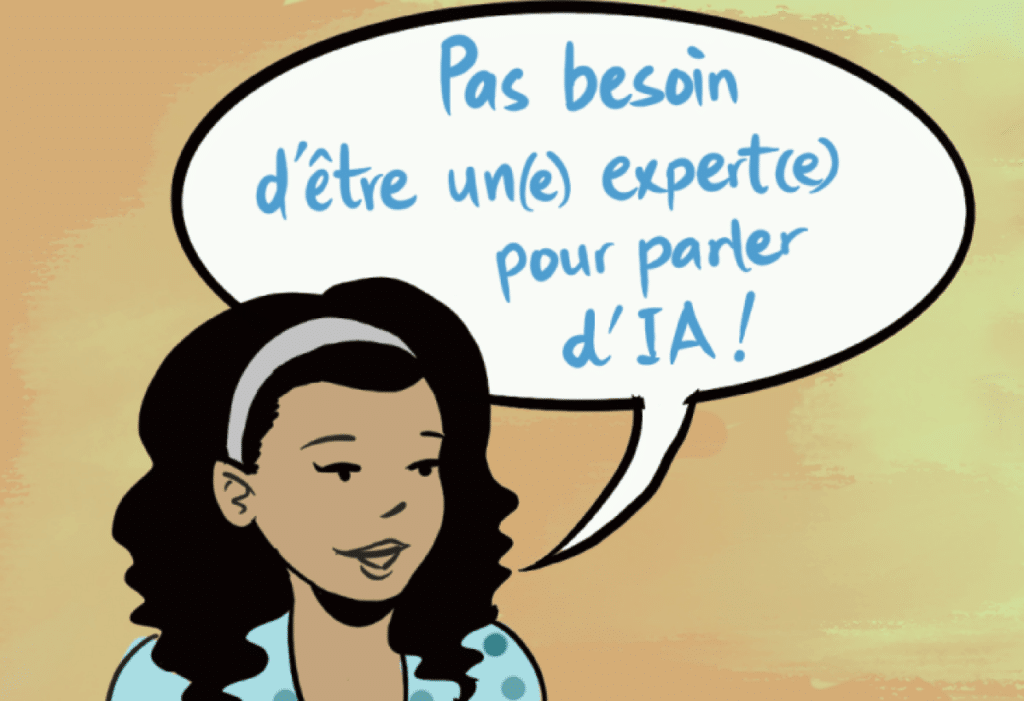
«You don’t need to be an expert to talk about AI, because if that were the case, the majority of the world’s population wouldn’t be able to have a say, since, by design, the right seat – or the right seat for technology – is [San] Francisco, China or Dublin,» noted one participant. She stated that democratising discussions on AI ensures that a wider range of perspectives, particularly those of under-represented groups, can influence the development and application of AI, making it more equitable and reflective of global diversity.
AI Policies and Strategies in Africa: Africans First
Countries such as Kenya, Egypt, Mauritius, Rwanda and Senegal are developing AI policies, as the importance of AI is increasingly recognised across the continent. The African Union is also developing a continental policy roadmap on AI, with support from IDRC and other development partners. Those who took part in the Café welcomed the development of a strategy, but emphasised that it should be guided by a clear understanding of the specific objectives, challenges and opportunities that AI presents in the African context.
One of the panellists warned of the possibility of the «Brussels effect», whereby EU regulations influence global standards due to the requirements associated with trade relations with the EU. They noted that African countries are often under pressure to align with global AI regulations, such as the General Data Protection Regulation, which do not necessarily reflect African community considerations and fail to recognise the nuances of marginalised communities. This highlights the importance of adapting AI policies to local realities.
She added that the roll-out of technology, including AI, is inherently political, with the potential to reflect and reinforce the political will of those in power. Consequently, the development of AI policies and strategies in Africa requires careful consideration of the political landscape to ensure that these technologies benefit society as a whole.
In Kenya, for example, existing laws barely address AI, with little or no mention of gender considerations. The rejection of a draft bill on robotics and AI by AI specialists due to the lack of female representation highlights a significant gap in the implementation of gender-inclusive AI policies. Furthermore, the absence of AI in school curricula and the lack of a comprehensive AI policy point to areas requiring urgent attention.
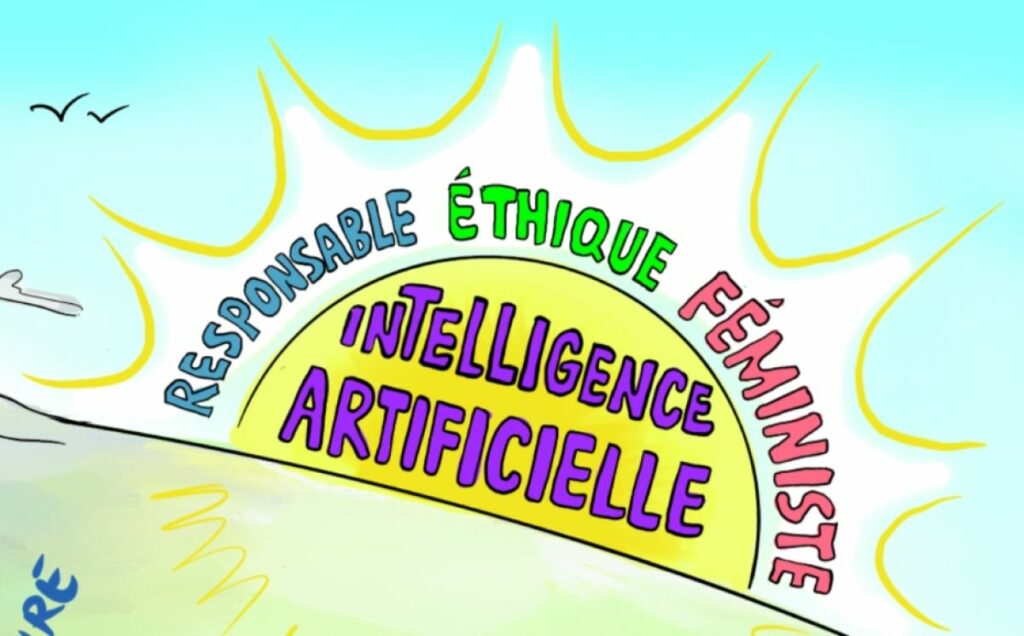
The speakers also emphasised the importance of inclusive global dialogue in the development of AI strategies, highlighting the need to ensure that the voices of countries in the Global South – particularly those in Africa – are heard.
Here are some recommendations that emerged from the discussion:
Promote the development of inclusive policies by ensuring that AI policy-making processes involve a diverse range of stakeholders from a variety of economic, social and cultural backgrounds. In the context of global policy-making, particular attention must be paid to ensuring that the voices of countries in the Global South and marginalised communities are included, so as to guarantee that AI strategies are equitable and reflect the diversity of needs.
Address bias in AI through platforms and forums in order to specifically tackle and mitigate social bias in the development and use of AI. This includes gender-based bias, ensuring that AI technologies do not perpetuate existing inequalities but rather contribute to gender equality.
Review and update legal frameworks, particularly in countries such as Kenya, where existing laws do not reflect the current technological landscape.
To improve education and awareness of AI by incorporating it into the curriculum at all levels, with a view to developing a fundamental understanding of AI among pupils.
To promote local AI research and development initiatives as the best way to ensure that AI solutions are tailored to meet the specific needs of the population.
Work actively to promote gender inclusion within AI development teams, policy-making forums and research initiatives.
This article is based on a Gender Café organised jointly by IDRC’s Eastern and Southern Africa Regional Office and the Canadian High Commission in Nairobi on 15 February 2024, with contributions from panellists Angella Ndaka (expert in socio-technical systems and AI ethics), Nanjira Sambuli (expert in technology, public policy and global governance), Melissa Omino (expert in intellectual property), Irene Mwendwa (expert in human rights and technology policy) and other participants.
Contributors: Loise Ochanda, Programme Officer, IDRC, with Elizabeth Muriithi, Regional Adviser, IDRC; Betsy Muriithi, Professional Development Grant recipient, IDRC; and Kagure Wakaba (gender specialist).
Not so long ago, people lived and went about their daily lives in close-knit communities. Every shopkeeper knew their customers personally and could...
This Machine Learning Glossary aims to provide a brief introduction to the most important machine learning terms – both for commercial and...
 FR
FR  EN
EN