As part of the second phase of the GRAIN project, a team from IPAR, comprising Diouli Kane, GRAIN project coordinator, Fatou Kiné Cissé, research assistant, and Ndeye Magatte Kebe, GRAIN project communications officer, took part in the fourth edition of SALTIS, held on 25 and 26 November 2025 in Dakar.
Over the course of two days, the conference brought together researchers, academics, entrepreneurs, representatives from public and private institutions, and young talent to discuss the practical applications of artificial intelligence (AI) in support of the African continent’s development.
The event brought together more than 200 speakers from Africa, Europe, Asia and the Americas to discuss a range of topics, including smart agriculture, connected health, digital education, sustainable energy, tourism and cultural promotion.
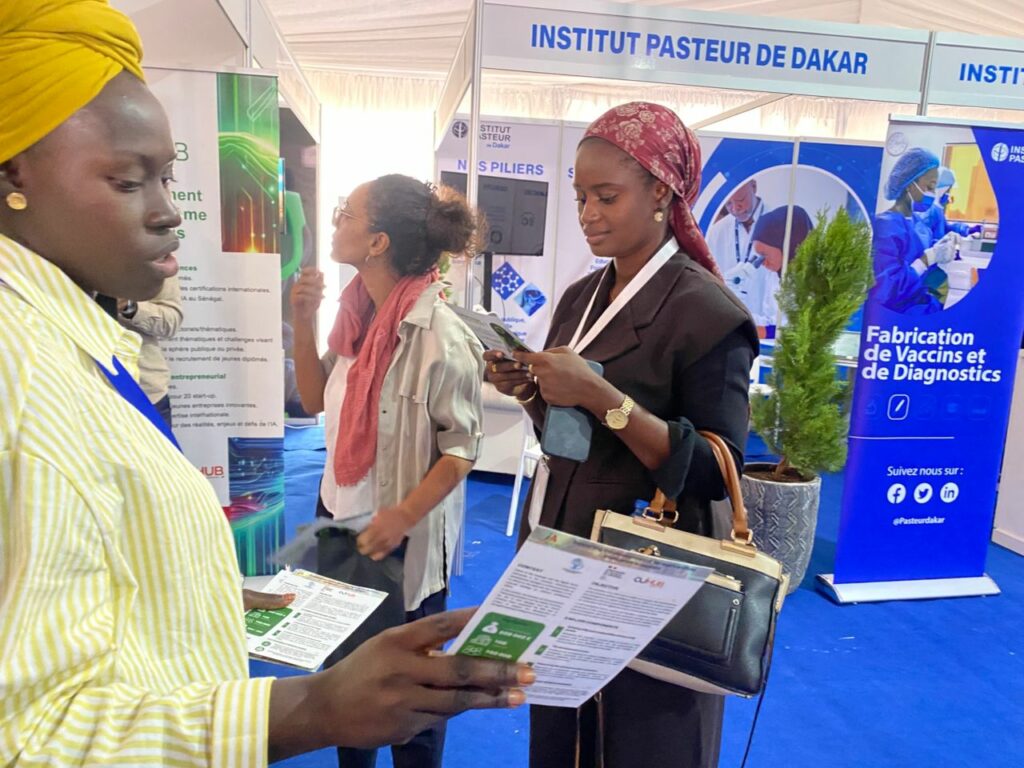
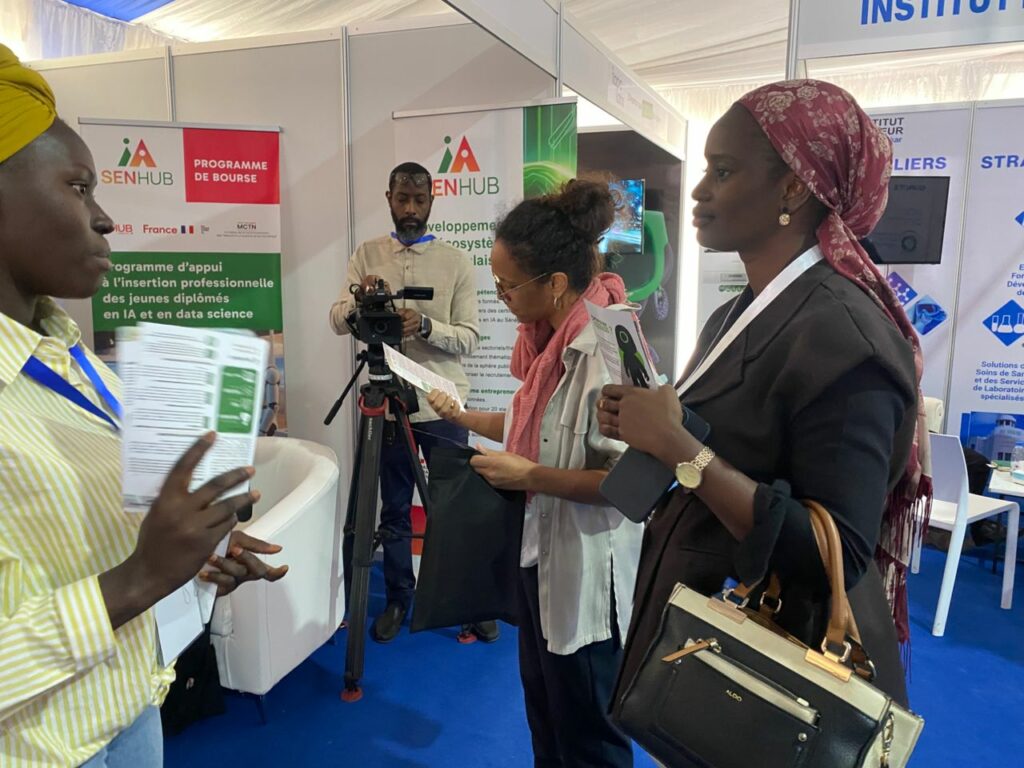
The team took part in the opening ceremony of the fourth edition of the International Exhibition of Algorithms, Science, Technology and Innovation in Senegal (SALTIS), which brought together leading experts and stakeholders, including Mr Ndiaye Dia, founder of the Senegalese Institute of Algorithms, Ms Wedji Kane, General Coordinator of SALTIS, Mr Boubacar Roger Thiam, Director of Digital Economy Promotion, and Ms Mariama Diop, founder of Dakar Network Angels.
This inaugural session provided an opportunity to take stock of the digital landscape in Senegal and across Africa, highlighting the progress made, the persistent challenges and the emerging opportunities.
For the GRAIN team, this participation provided a strategic opportunity to gain a better understanding of current AI trends in Senegal, to deepen its understanding of the national ecosystem, and to engage in fruitful exchanges with innovators and key stakeholders in the sector.
The panels highlighted several major challenges relating to the research, development and scaling up of technological solutions. Although these challenges are not unique to Senegal, the discussions particularly highlighted the lack of funding, both for research and development and for the market launch phases of innovations.
A round-table discussion on the Technology New Deal brought together members of the National Digital Council, SONATEL and private-sector stakeholders. Discussions centred on sector-specific solutions, the structural challenges facing the digital ecosystem and the need to develop technologies tailored to local circumstances, in particular by taking national languages into account. The central role of the State in shaping and governing the digital ecosystem was also emphasised.
In addition, a keynote address by Mr Aymerou Ndiaye, a PhD student and researcher, addressed data-related issues in Africa, highlighting the existing challenges, the opportunities to be seized, the continent’s linguistic potential, and the importance of responsible data governance.
Finally, a special segment «Tech & Environment» session provided an opportunity to present the KAIKAI project, which aims to improve the availability of local air quality data in Senegal, strengthen collaboration between stakeholders, train young people in the use of environmental data and raise awareness of the impacts of air pollution.
The team’s participation concluded with a round-table discussion on scientific research and technological sovereignty, bringing together researchers and experts from the private sector to discuss the challenges facing research, geopolitical issues and the funding mechanisms required to develop sustainable technological research.
Not so long ago, people lived and went about their daily lives in close-knit communities. Every shopkeeper knew their customers personally and could...
This Machine Learning Glossary aims to provide a brief introduction to the most important machine learning terms – both for commercial and...
 FR
FR  EN
EN