
Aim of the project
The project will identify and highlight the barriers to women’s digital inclusion and examine ways of incorporating women’s perspectives into the development and implementation of agricultural AI systems, as well as into the associated policy processes
Project summary
Artificial intelligence (AI) technologies are being explored in Africa to increase food security and improve the efficiency of agri-food value chains. In a context where gender inequality is already evident, women make up the largest proportion of those involved in agri-food systems within the informal sector, particularly in food production, value addition and marketing.
Whilst the digitisation and digitalisation of agriculture may bring socio-economic benefits for women, it is likely that women will be excluded from the roll-out of AI technology. This risks further widening the gender gap, preventing women from benefiting from the digital transformation on an equal footing.
This study examines how the inclusion of women in Kenya’s informal economy contributes to inclusive digitalisation. The project will identify and highlight the barriers to women’s digital inclusion and explore ways of incorporating women’s perspectives into the development and implementation of agricultural AI systems, as well as into the associated policy processes.
Country: Kenya
Project leader

Angella Ndaka Angella Ndaka recently completed her PhD in sociology and gender studies at the University of Otago in New Zealand. Her research has focused on sustainable techno-futures in artificial intelligence (AI). She holds further qualifications, including in public policy from the Australian National University, and in intercultural and multi-stakeholder dialogues and education from Kenyatta University. She is currently an early-career researcher in the field of critical socio-technical studies at the University of Otago, and Executive Director and Head of Research on AI Ethics and Governance at the Centre for African Epistemic Justice (CAEJ). At the CAEJ, she leads research that promotes methodologies informed by African technological priorities and values, and complemented by global best practices in responsible research and innovation (RRI). She leads the CAEJ to be a voice in the fight against the epistemic injustices that accompany investment, the design and use of AI – with the aim of contributing to the production of research findings and policy frameworks that enhance the equitable and sustainable governance of AI in Africa and globally. Angella is a thought leader in complex and critical discourses on AI and emerging technologies, and a strong advocate for the critical inclusion of women and other minority groups in technology co-design and other critical decision-making spaces. Her thought-provoking conversations and policy-oriented discourse on AI have earned her global recognition, securing her a place on the list of the 100 most brilliant women in AI ethics in 2023. In the same year, she was named a winner of the Women in AI Awards (APAC) in the “Cultural Leadership” category. Angella is a passionate advocate for the voices of the Global South in discussions on AI, which she promotes through research, blogging, tech talks and conferences.
The team members
Samwel Oando
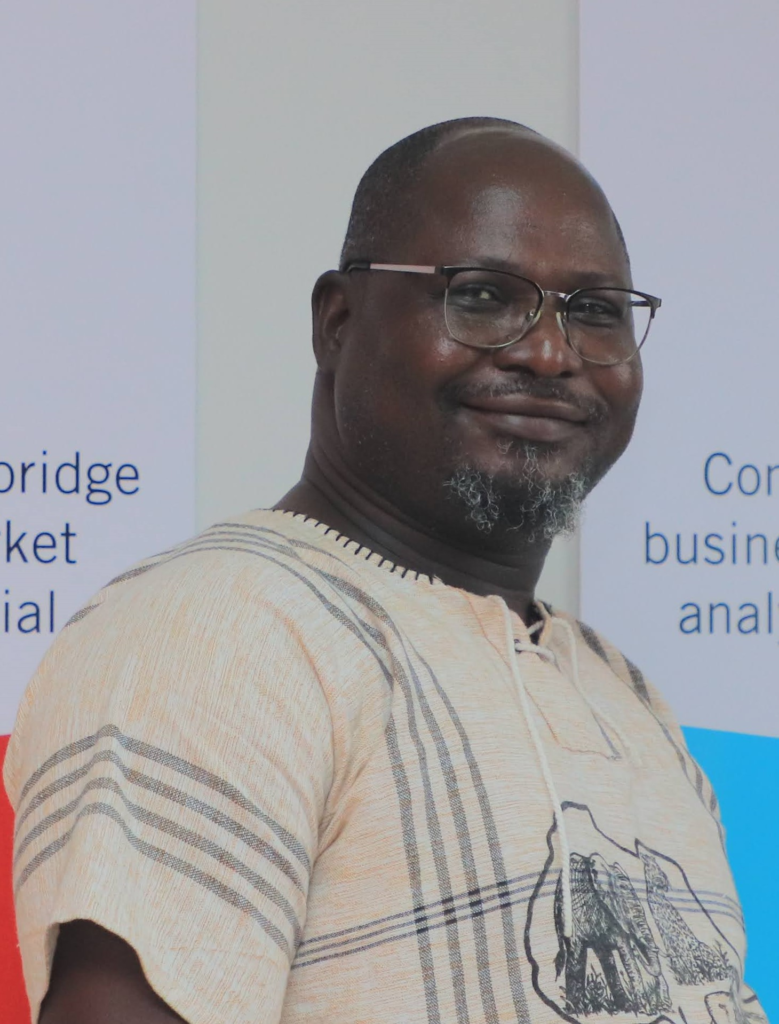
Samwel Oando holds a PhD in Peace and Conflict Studies, a Master’s degree in Economics, a Master’s degree in Gender, Women and Development Studies, and a Bachelor’s degree in Economics. He has 15 years“ experience in the NGO sector, academic research and higher education. Much of his previous work in gender research has focused on studies of violence and discrimination, notably the projects ”Stop Violence Against Girls in School“ (SVAGS), ”Action for Children’s Rights in Education“ (ACRE) and ”Safe Schools for Girls” (Safe Schools for Girls). His work aims to promote equal opportunities by seeking to amplify marginalised voices. Her previous professional experience includes serving as Executive Director of the Network for Peace and Development (PeaceNet-Kenya), Research Director (IGNITE) and Research Officer/Analyst at the Catholic University of East Africa (CUEA). Samwel has been involved with the UWIANO platform for peace and launched a project on countering violent extremism in the IGAD region. He has also undertaken dozens of consultancy assignments with Microde Consult. He has worked for a wide variety of donors in various countries, including SADC countries, Central African nations such as Burkina Faso, as well as in East Africa, Kenya and Tanzania. Mr Oando will bring a wealth of professional expertise to the role.
Dr Eucabeth Majiwa
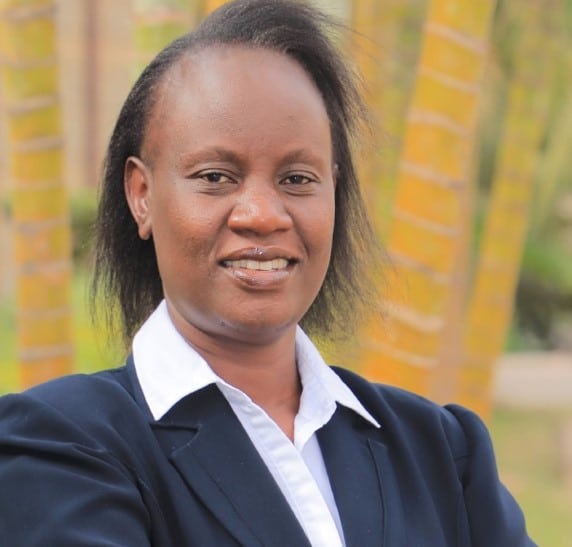
Dr Eucabeth Majiwa is a lecturer in the Department of Agricultural and Resource Economics at Jomo Kenyatta University of Agriculture and Technology, where she has been teaching agricultural economics and courses related to agribusiness since 12 October 2017 to the present day. Her research focuses on agriculture, agri-food and rural economic issues, including food systems, on-farm efficiency, and the evaluation and transfer of technologies aimed at identifying programmes and policies to improve productivity and efficiency in agricultural and agro-industrial systems. She has participated in applied field research on circular practices in the Rwandan agricultural sector as part of the Rwanda-CAE project, a collaborative initiative between the University of Rwanda and the Neu-Ulm University of Applied Sciences (HNU) in Germany. The project is funded by the DAAD with financial support from the German Federal Ministry for Economic Cooperation and Development (BMZ). She has secured funding for two research projects, namely the “African ai Japan” project on: Improving the socio-economic status of dairy goat farmers in the counties of Kiambu, Embu and Meru in Kenya, and the collaborative research project by the African Economic Research Consortium on the impact of agricultural and food policies on nutritional outcomes in Africa – national case studies (AFPON) – the Tanzania case study, which is currently underway. She serves as a reviewer for several journals. She has successfully supervised five postgraduate students to completion, and five others are currently under her supervision.
Ms Harriet Ratemo
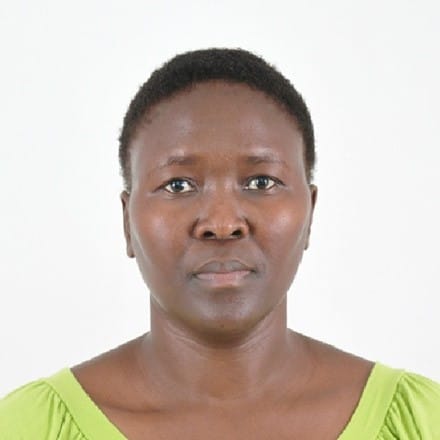
Ms Harriet Ratemo is a computer scientist and PhD researcher at Jomo Kenyatta University of Technology. Her PhD research focuses primarily on AI and innovations in cybersecurity. Harriet Ratemo is a computer scientist specialising in software and has developed AI systems. In the past, she has been involved in several AI design projects. For example, she contributed to the project “Requirements elicitation for a blockchain vaccine supply chain management web/mobile application”, published in Gates Open Research. She also contributed to the design of MazingiraApp for real-time air quality monitoring at JKUAT, VizAfrica 2018 Visualisation Symposium, 2018. As a woman working in AI design, she offers insights into how women are often excluded from design spaces.
Organisation: Centre for Epistemic Justice in Africa (CAEJ)
The Centre for Epistemic Justice in Africa (CAEJ) is a public-interest consortium, formed through collaboration between renowned academics and researchers from across Africa, and based in Nairobi, Kenya. We provide a platform for African researchers to address historical issues of knowledge and data justice through research in sub-Saharan Africa. We believe that the lack of knowledge justice is a mechanism that is often exploited to promote sexism, racism, ageism and other forms of discrimination, which reinforce the marginalisation of minority groups. We therefore promote research methodologies grounded in African priorities and values, complemented by global best practices, whilst treating African populations as sovereign individuals with legitimate rights over data and knowledge. We therefore aim to help African governments and organisations shape their own narratives and their own future. Whilst recognising that conventional research practices, data autonomy and broader digital literacy are essential to Africa’s economic, political and cultural autonomy in the age of the technological revolution, we are also aware that emerging technologies are not neutral.
One of our objectives is therefore to work with various transdisciplinary teams and to establish partnerships with organisations to explore research and capacity-building on the social issues anticipated in the design and adoption of emerging technologies and related practices, with the aim of helping the various technology stakeholders to make decisions, formulate policies and adopt technological practices and cultures that reflect everyone’s needs, values and priorities regarding technological innovations. In this way, we ensure that no one is excluded from the benefits and opportunities offered by technology.
Not so long ago, people lived and went about their daily lives in close-knit communities. Every shopkeeper knew their customers personally and could...
This Machine Learning Glossary aims to provide a brief introduction to the most important machine learning terms – both for commercial and...
 FR
FR  EN
EN