Aim of the project
The overall aim of the project is to develop a prototype multilingual machine translation system capable of detecting and mitigating gender bias in low-resource languages.
Project summary
AI systems replicate and reinforce existing social biases, a problem that is now widely recognised and studied. However, current research into gender bias in natural language processing (NLP) offers a glimmer of hope for a solution.
Gender bias in AI applications such as machine translation (MT) is common and must be carefully taken into account when developing these applications.
In this project, we propose to develop a machine translation prototype capable of detecting and mitigating gender bias. As the target languages – Amharic, Ge’ez and Awign – fall into the category of languages with limited resources, we will use transfer learning to capitalise on languages with abundant resources, such as English.
The project is relevant and timely in addressing the challenges posed by the language barrier between different local communities, as well as the issue of gender bias in machine translation datasets.
Successful implementation of the project could help to address these challenges both within and outside Ethiopia, particularly in sub-Saharan Africa.
Project leader
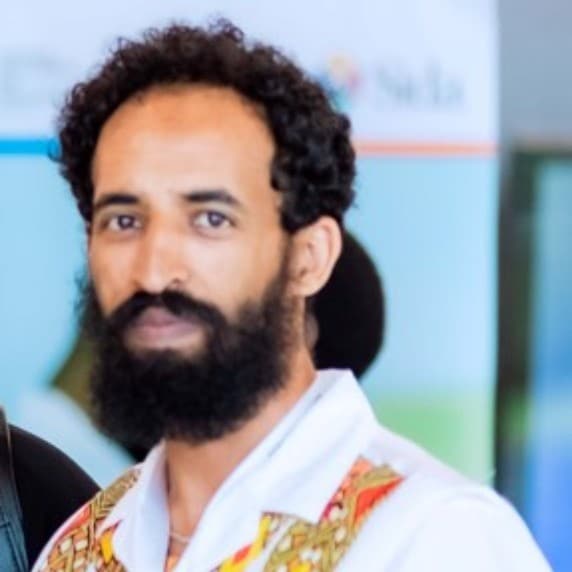
Walelign Tewabe Sewunetie holds a degree in computer science and has over 14 years“ professional experience in the fields of teaching, consultancy, research and project work. He is a graduate of the Arba Minch University Institute of Technology, where he obtained a Master’s degree in computer science. Walelign is a dynamic young academic with an interest in numerous areas of research. His research focuses on computer science, AI, NLP, intelligent tutoring systems, software engineering, and more. His PhD research topic is the design and development of models for the automatic generation of questions. He has published more than 10 research articles in renowned international journals and conferences, indexed by Scopus and the IEEE, as well as in numerous others. He has worked on numerous major projects throughout his career. Among these, ”Designing Machine Learning Methods for Software Project Effort Prediction” was funded by Debre Markos University.
The other team members
Zewdie Mossie has been working at Debre Markos University for 15 years. He currently holds the post of Dean of the Institute of Technology at Debre Markos University and is an Assistant Professor of Computer Science. He has taught a range of subjects, including computer programming (in C++ and Python), database management, computer and information security, IT project management, big data analysis, as well as research and academic writing. His research focuses on natural language processing, big data analysis, social media data analysis, human data mining, and information and network security. He has published articles in journals and contributed to several conferences on topics related to information technology and computer science. In addition, he has participated in numerous projects and is currently working on the following projects: “Design and development of a mobile Amharic speech synthesis system for visually impaired and blind students”
Yaregal Assabie is an associate professor at Addis Ababa University and head of the Department of Computer Science. In 2009, he was awarded a PhD in electrical engineering (with a specialisation in computer systems) from Chalmers University of Technology in Gothenburg, Sweden.
He obtained a Master’s degree in Information Science from Addis Ababa University (AAU), Addis Ababa, in 2002, as well as a Bachelor’s degree in Computer Science from Addis Ababa University (AAU), Addis Ababa, in 1998. He has held various positions within different projects and committee work. He has taught a range of postgraduate courses, including natural language processing, digital image processing, deep learning and distributed systems. Yaregal Assabie has also carried out five research and development projects funded by the Ministry of Science and Technology, Addis Ababa University and the Ministry of Communication and Information Technology.
Fentanesh Nibret is Assistant Professor at Bahir Dar University, Ethiopia. A public health researcher, she has worked on gender-based violence against women, women’s autonomy, gender inequality and adverse health effects. She has published articles in various journals on topics related to gender and health, such as women’s decision-making autonomy and other factors contributing to anaemia among married women in Ethiopia, the associations between early marriage and early childbearing and anaemia among adolescent girls in Ethiopia, and women’s autonomy and the use of maternal healthcare services in Ethiopia. She has a deeper understanding of gender and related issues, which can help achieve one of the IA’s objectives of combating gender bias. Her upcoming research focuses on the use of digital technology to provide information to women in order to improve their health.
Yenework Belayneh has been working at Injibara University in Ethiopia for six years. She is currently the Director of the Injibara University Library and has also served as Head of the Information Technology Department. She has taught a range of subjects, including emerging technologies, the fundamentals of programming, basic programming, data communication and computer networks, network design, systems administration, as well as data structures and algorithms. Her research focuses on natural language processing and gender-related applications in women’s lives. She has also been involved in organising and evaluating conferences. She is currently working on the following projects: AUTOMATIC SPEECH RECOGNITION SYSTEM for AWNGI (አውጚ) (English language).
Institution
Debre Markos University (DMU) is a public research university located in Debre Markos, Ethiopia. It was established in January 2005. Two years later, DMU commenced teaching and learning activities with 760 full-time students, 53 academic staff and 34 support staff, as well as 21 contract staff, and its name was officially declared as Debre Markos University. Currently, UMD has 51 undergraduate students, 47 postgraduate students and two doctoral programmes, delivered through full-time, continuing and distance learning. DMU has provided competitive and competent graduates to national and international organisations at 11 undergraduate and postgraduate graduation ceremonies. In addition, 126 doctors have graduated across three cycles. The university currently comprises three campuses, five colleges, two schools and three institutes.
Not so long ago, people lived and went about their daily lives in close-knit communities. Every shopkeeper knew their customers personally and could...
This Machine Learning Glossary aims to provide a brief introduction to the most important machine learning terms – both for commercial and...
 FR
FR  EN
EN