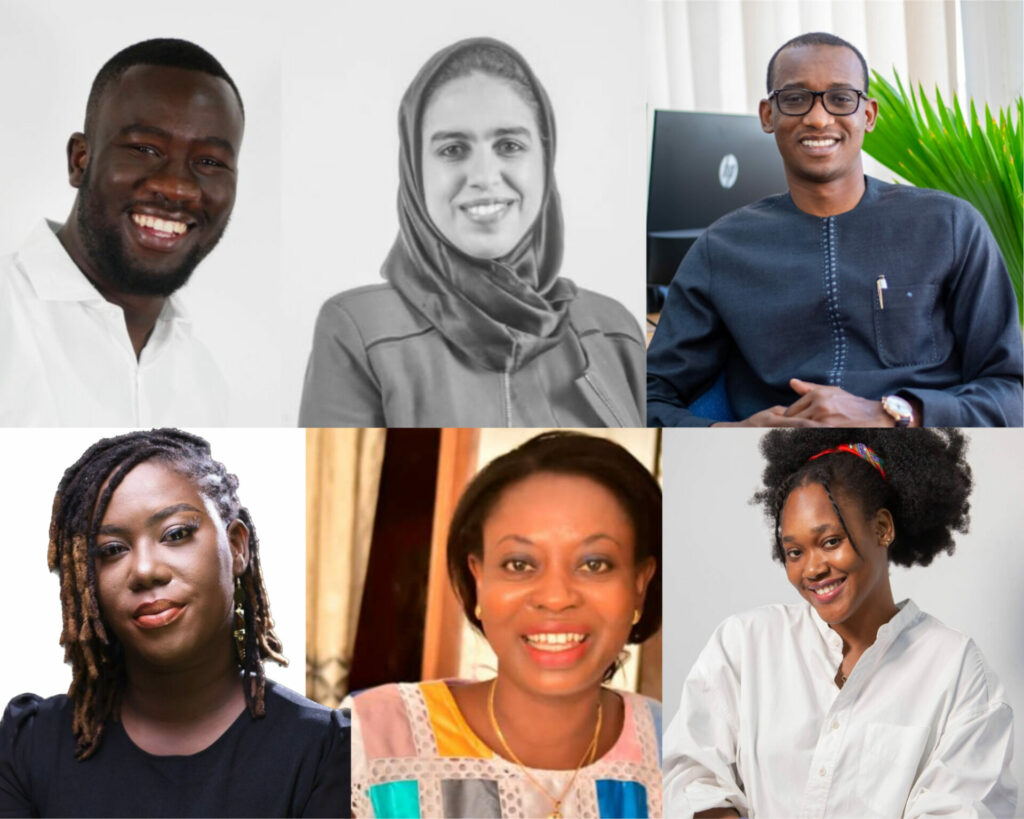
As part of the 2023 International Women’s Day celebrations, held under the theme «Towards an inclusive digital world: innovations and technologies for gender equality», Ipar organised a webinar on Tuesday 27 March focusing on «the challenges of the responsible and inclusive use of Artificial Intelligence (AI) through the lens of policy and research in Africa».
Within IPAR, several research projects (GRAIN, DUA, AgriDATA) focus on responsible AI, which is a powerful tool that can drive Africa’s development. However, it can lead to inequality if not used responsibly.
Access to data and technology, as well as the pressing need to ensure data reliability and security, present challenges in Africa. To this end, policymakers, international institutions and the private sector must work together to maximise the benefits of AI. These stakeholders can put mechanisms in place to invest in infrastructure and to regulate in such a way as to harness the potential of digital technologies to promote diversity and inclusion.
To ensure gender equality is properly integrated into the use of artificial intelligence, the regional virtual panel, moderated by Dr Marame Cissé, a gender expert at IPAR, provided an opportunity to address various challenges relating to AI, in particular the development of applications and algorithms to reduce gender gaps in the field of AI in Africa.
Five (5) speakers from Senegal, Côte d’Ivoire and Morocco raised the issue of strengthening practices that promote digital inclusion, access to technology and women’s entrepreneurship. The implementation of policies promoting responsible and inclusive AI, and the awareness-raising strategies to be encouraged amongst decision-makers and entrepreneurs regarding the opportunities for women’s inclusion in Africa’s digital transformation.
Introducing the webinar’s theme, Dr Marame Cissé pointed out that this year’s theme is an invitation to examine the challenges women face in accessing digital technology. Access to digital innovations and technologies is a key development issue. The gender gap in digital access undermines development, given the role women play and the importance of these technologies in everyday life.
According to the UN Women’s 2022 Gender Equality Spotlight report, the exclusion of women from the digital world has reduced the gross domestic product of low- and middle-income countries by 1,000 billion dollars over the last decade. This should prompt decision-makers to take into account the specific perspectives and needs of different groups in society – particularly women and marginalised individuals and communities – when developing and deploying AI. The panellists discussed, in turn, innovative practices, policy mechanisms and recommendations that promote gender equality in the digital sector.
Influencing policy and fostering synergy between initiatives to promote digital inclusion
Charlette N’guessan, an Ivorian entrepreneur and AI specialist, argued that AI offers great potential but may have vulnerabilities that could undermine its positive and responsible use, hence the need to regulate the sector to minimise the risks associated with these vulnerabilities.
Echoing this sentiment, Alpha Seydi Ba, a media and communications expert (Senegal), emphasised the need to strengthen political will in promoting inclusive leadership on AI, a paradigm shift, investment in training – particularly for women – and so on. Economic planning documents, strategies and so on are all areas where action can be taken.
To encourage policymakers to take action, Mr Ousseynou Gueye, Director of Polaris Asso in Senegal, suggests strong advocacy focused on the specific problems women face: cyberbullying, personal data protection, etc. Action must be taken not only at local level, but also at sub-regional and regional levels. Returning to the topic of governance levels, Charlette N’guessan highlighted the important work carried out by the African Union’s High-Level Panel on Emerging Technologies (APET, led by AUDA-NEPAD) in promoting the responsible deployment of AI.
Training, awareness-raising and the protection of personal data: key measures to accelerate digital inclusion
Closing the gender gap in the field of AI in Africa is a complex undertaking. According to Salma Gherraby, founder of Business Innovation (Morocco), it requires a holistic and inclusive approach. In her presentation entitled The Challenges of Using AI.pdf Ms Gherraby advocates for the promotion of inclusive algorithms and the creation of an inclusive corporate culture, training AI developers on gender issues, the involvement of women in AI design, and raising awareness of AI and gender.
In the same vein, Nadine Zoro, Director of the DigiFemmes Programme (Côte d’Ivoire), calls for the digital world to be seen as an opportunity rather than a hostile environment for women. She encourages women to embrace digital technologies and use them more often. She points out that the majority of women (in Africa) have never used a computer; this is often the case for women living in rural areas
In addition to access, the issue of women’s adoption of technology arises. Through tailored training programmes, the most basic information must therefore be made available to them. She added that it is essential to provide an entrepreneurial environment for women in all their diversity. Practices that promote digital inclusion, access to technology and women’s entrepreneurship in and through the digital sphere must take into account the diversity of women’s circumstances and provide them with secure tools and solutions.
Governance, regulation and trust: essential mechanisms for promoting technologies
According to Charlette N’guessan, AI offers great prospects but may have flaws that could undermine its positive and responsible use, hence the need to regulate the sector to minimise the risks associated with these flaws. In her view, the gap between Africa and the West in terms of AI must be bridged by ensuring that the solutions developed meet Africa’s needs and are inclusive. She also recommends identifying regulators amongst AI stakeholders, as well as stepping up infrastructure policy, defining policies that enhance access, and providing a framework for the use of artificial intelligence.
Turning to governance issues, Mr Ousseynou Gueye noted that the responsible use of AI also depends on trust and sound, inclusive governance. In his view, building trust in the use of digital technologies to ensure their positive uptake by women – by safeguarding personal data and digital tools – is essential to encourage more women to adopt them.
The discussions highlighted the key challenges facing us, but also identified several potential solutions for the responsible use of artificial intelligence, namely the inclusion of women and young people, training, access to data and connectivity, investment in infrastructure, policies tailored to women’s needs, awareness-raising and advocacy for better regulation and governance, transformative research, etc.
To conclude the session, Dr Laure Tall, Research Director at IPAR, pointed out that it is time to gear up for the investments and numerous projects being implemented across the African continent. There are ways to bring all these initiatives together and create synergy between them. Now is the time for action – and for synergistic action. To this end, she advocates investment in research and in knowledge for young people and women, as AI and technological tools should not be viewed as highly complex and out of reach. Looking ahead, IPAR plans to hold a webinar in English on the same topic in the near future.
Not so long ago, people lived and went about their daily lives in close-knit communities. Every shopkeeper knew their customers personally and could...
This Machine Learning Glossary aims to provide a brief introduction to the most important machine learning terms – both for commercial and...
 FR
FR  EN
EN